Gramophones manufactured or retailed in Australia (and some from NZ)
This is a work in progress with some manufacturers needing confirmation that the cabinets where made locally.
If you have any info to share please email me adrianjsmith@optusnet.com.au
Last updated 17/05/25

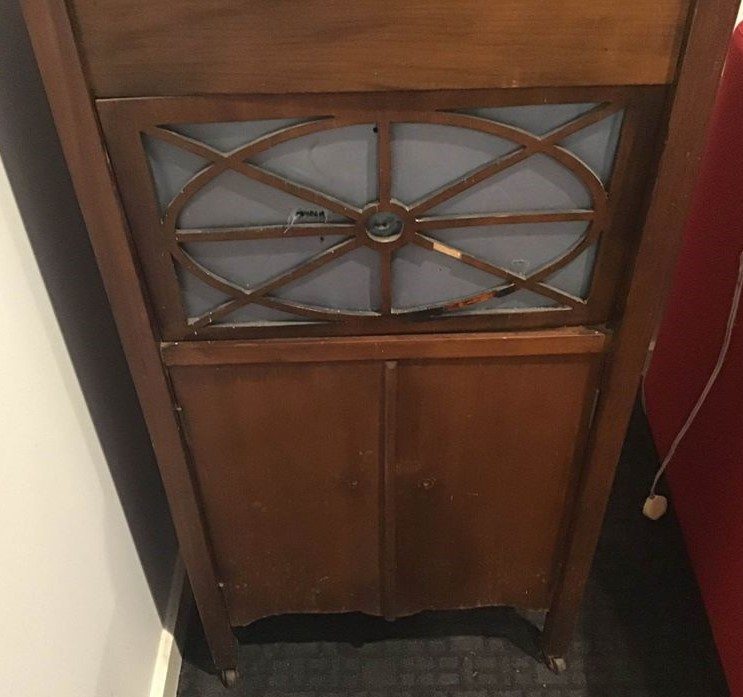


The Beautiphone -

Bebarphone - manufactured for Bebarfalds Sydney.


Beautiphone - NSW


Concertphone -


COO-EE: - Made by Eccles 95 St. John Street Launceston Tasmania. They first advertise the COO-EE December 1922 referring to a number of cabinet models from 4 Pounds to 50 Pounds, and a portable. Advertising stops after February 1926.

Coronola -

Dahlmont - Myer stores


Eddyola - Manufactured by Home Recreations (Eddy's) Ltd 12 Rundle Street Adelaide.


Glenola - made by Brunswick Furniture Pty Ltd, 304 Glenlyon Rd East Brunswick.


Harmonola - Originally a Piano brand name. Advertising starts around July 1922 with a lidless table model - No 1 (Maples North Melb). Reference to at least 10 models. Radio combo's under same name in Dec 1926. Still advertising gramophones by 1930 where there is reference to a portable model.


Homophone - manufactured by Home Recreations Ltd (see Salonola).

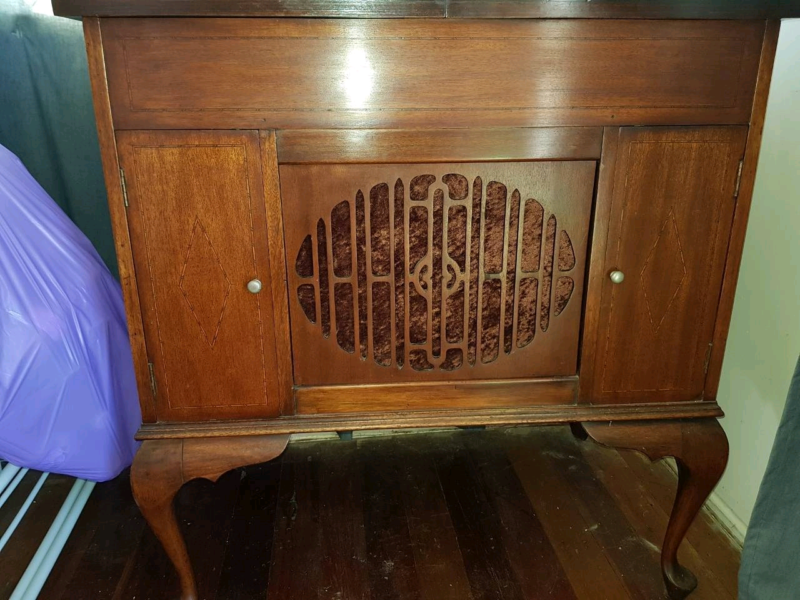


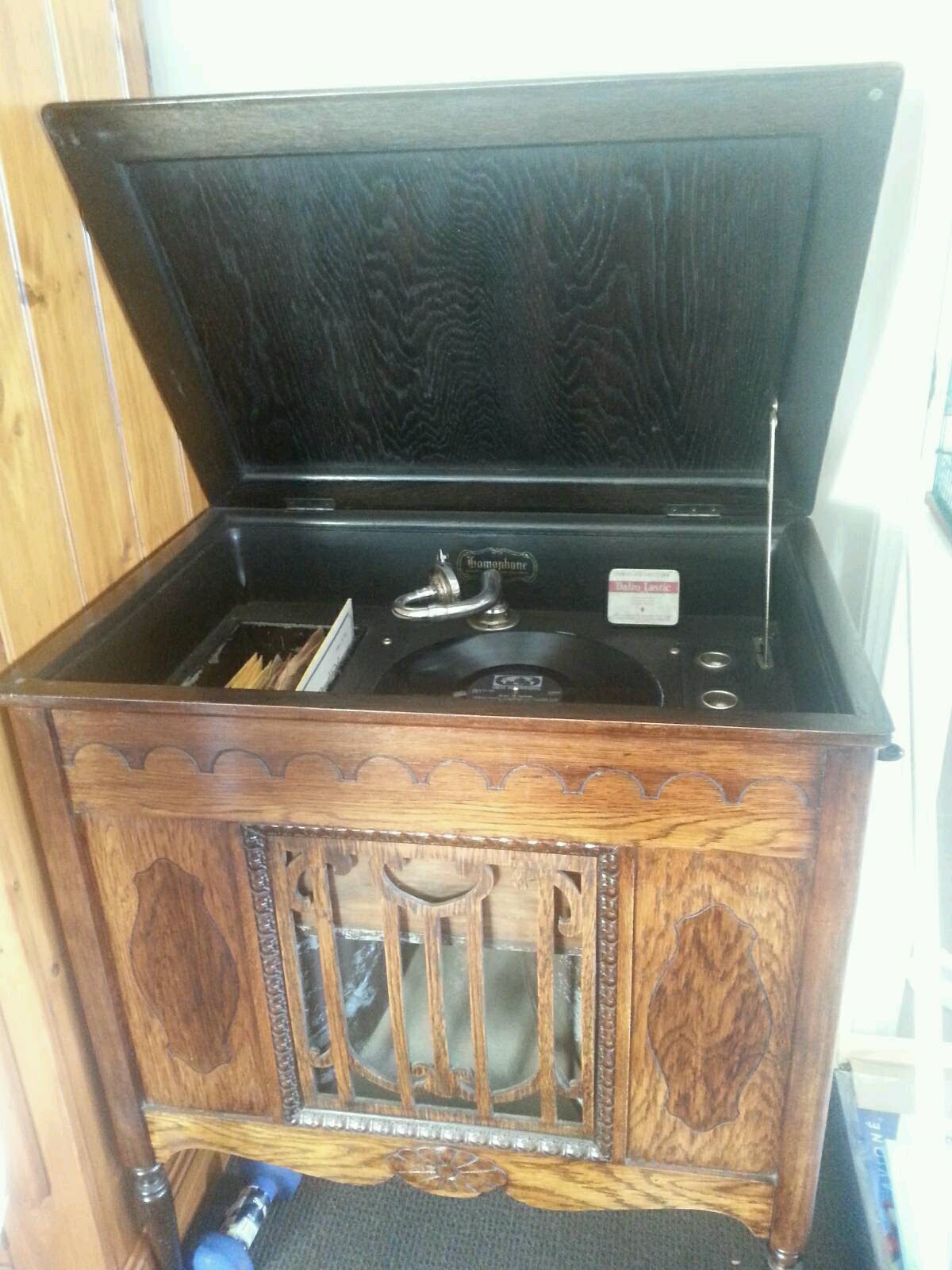
Kalophone -
Lincoln - Lincoln Records Ltd, Lincoln Building Pitt Street Sydney. Retailer and wholesaler.


.jpg)

Operatone -


Perfectone - TBC

.jpg)


Rexonola - see here
Rhondaphone -
Salonola: - The Salonola first appears in advertising from August 1914 where it states that it is made exclusively for Alex Pogonowski of 23 Pitt St Circular Quay. Prices quoted are from 14 to 25 pounds suggesting a number of different models were available. Heiron and Smith Ltd rarely show the various models they produced in their advertising, which has made identifying them a challenge. It is quoted many years later that Mr Pogonowski was not just the original patentee but also the inventor of the Salonola.
Apart from the occasional auction sale we see no advertising of the Salonloa between August 1914 and December 1916.
By December 1916 they are being sold by Heiron and Smith Ltd (purveyors of recreations for the home) at their showrooms 397 George Street Sydney. The company was registered in 1913 being manufacturers of billiard tables since 1883.
This wonderful advertisement (below) from 1916 must have cost a fair bit back in the day. To date I have not seen an example of the gramophone depicted (Model No. 5). Its very similar to the Gramophone Co Ltd (HMV) Queen Anne "Crouching Frog" that was also sold in Australia from around 1911.
Update 8/05/19 - I must thank Steve (surname withheld) for providing me with photo's of the Model No.5.


Advertising from January 1917 states for the first time that the Salonola is made by Heiron and Smith Ltd (noting that Home Recreations Unlimited is also quoted in smaller font). In 1917 the company had in fact acquired the sole manufacturing and selling rights throughout the world of the Salonola.

Here are two more wonderful advertisements from February 1917 and April 1917. The first one showing that they now have a showroom at 507-509 Queen Street Brisbane, in addition to their George and Castlereagh St addresses. Both these averts would reappear again and again well into 1919-20, particularly following the opening of the Forbes and Orange Stores in 1919.


In November 1917 Heiron and Smith Ltd moved (due to end of lease) from their 397 George Street address to their head office at 214 Castlereagh St. By December 1917 Heiron and Smith Ltd are advertising directly out of their Brisbane store which they refer to as - Petrie's Bight, Queen St Brisbane.
In January 1918 a different model is finally shown (see right). This model will appear the most in advertising from now until late 1921. I am going to assume this is the model they called the "Upright Grand".

March 1918 Heiron and Smith Ltd are pushing home the fact that Salonola's are made in Australia and make reference to various forms of cabinets - "Sheraton", "Jacobean", "Mission" (is this a style or a reference to a dark oak finish) and other forms. Unfortunately they don't provide images or any other details. Also in March we get the sequel to the story of Clarence "A Modern Romance" from April 1917.
In June 1918 Heiron and Smith Ltd are "securing a freehold of extensive factory premises at Marrickville, and are now concentrating thereto the whole of the work of the billiard table building, and the manufacture of their increasingly popular talking machine — The "Salonola".
By August 1918 W.S. Millard and Sons Ltd are advertising that they are sole agents for "Heron & Smith" (noting the miss type of Heiron)billiard tables and the Salonola. This advert also gives us only a poorly rendered image of what one of the models of Salonola may look like (I suggest that its not intended to represent a particular model - as to date I have not seen a Salonola of this time period with doors in front of the horn). The 'Solonola Cathedral' and 'Salonola Harmonic' which don't appear for another 10 years do, however they are very different in their designs.
Just in time for Christmas we see another image of a Salolona which tells the reader that it is a "Model No. 4" available in Maple or Oak and retails for 40 guineas (pounds). The advert also tells us their are a at least 6 models available based on size and price - from 20 to 55 guineas and that they are available in a choice of woods and finishes. Like all the previous images shown to date, I haven't seen an example of this flat lid model No. 4. Interestingly Heiron and Smith Ltd and later Home Recreations (Aus) Ltd stay with the model No. 4 right until they remove the Salonola from their sales catalogues in Oct 1929. Albeit the design of the cabinet does change.
In April 1919 they open a showroom at Grinsted's, Lachlan Street Forbes. A newspaper article gives as another, albeit confusing indication of the models available - 'The Upright Grand" model of maple; The "Sheraton" (mistype), inlaid design; Model No. 5 polished rosewood, Model No. 3 in light oak, wax finish; Model No. 1a in maple walnut; Model No. 1 mission in dark-wood finish, also in light oak'.
The company also starts advertising a quote by the Director of the Sydney Conservatorium of Music - Mr. Henri Verbrugghen (from March 1919) which they would use for many years to come. This version from May 19 shows what appears to be same model "Upright Grand" advertised back in January 1918.

A local agent is appointed at Parkes NSW with a showroom being opened at Clarinda Street Parkes on the 12th July 1919. By August there is also a showroom at Alva Chambers, Summer Street, Orange NSW. Other local agents are appointed after this such as Grenfell NSW and Albury NSW - however I will not go into detail here except to say that Salonola's are being sold all over the country by late 1920.
Christmas 1919 and the Model No. 4 is again advertised at 40 pounds by the Brisbane Store as it was the year before. For the first time however we read about a Salonola selling for 100 pounds, 45 pounds more than the most expensive previously advertised!

The 'Upright Grand' appears once again, this time in a magazine - The Home: an Australian quarterly Vol. 2 No. 1 (1 March 1921)
 We see another great advert on 27th March 1921.


Here we see Allan's selling the Salonola for the fist time in July 1922.

"Art in Australia" magazine from 1922.
 Finally in September 1922 confirm what the "Model No. 5" looks like and can identify it as the first model advertised back in 1916!

In Nov 1922 they advertise showing a picture of their sound-box lid.


Xmas 1922.


Easter - April 1923. Another unusual story resulting in the purchase of a Salonola. We also read about the new premises of 388 George Street. Purchased due to the expansion of the business and to be their new head office, warehouse and showroom in Sydney.


Below we see a Home Recreations Ltd pavilion display at the Royal Agricultural Society of New South Wales Easter Show in 1924.

In 1925 Tasmanian engineer Eric Waterworth developed and patented the world's first Electric Record Changer. By 1927 it was being demonstrated in a Salonola. Unfortunately if never made it to market.

A photo of the early design from 1921.
April 1925 - Here we see a display by Home Recreations (Eddy's) Ltd in South Australia - referred to as the 'All Australian Exhibition'. The exhibition (run by the Chamber of Manufacturers) was in Adelaide South Australia and ran over 48 days with an attendance in excess of 636,000. The Salonola was awarded a gold medal.

During the exhibition we read about the new spring balanced tonearm."The tone arm is also exclusive to the Salonola, and is balanced with a compensating spring, which takes the unnecessary weight. No feature in modern talking machines approaches this simple but wonderful device."
May 1925.

Also in May 1925 buyers are reminded of the high price of imported gramophones. It also references Australian made portables, however it doesn't specify if they carry the Salonola name.


 The two photos of the Salonola below are clearly the Cathedral model (one I used to own) however it is named by the gold lettering simply as as "The New Salonola".


And in Oct 1928 we see what I assume is the "Console Grand". Also mentioned is a Salonola "Upright Grand" and the reappearance of the Salonola "Model No. 4" upright cabinet (possibly a new design). This ad also references leather portables however it does not specify whether they carried the Salonola name.
Here we see the three new models advertised for Christmas 1928.

Below we see for the first time what the Salonola Consolette looks like with the doors opened. I am yer to see an example of this gramophone.

In March 1929 - we see the Salonola Harmonic. Photos are of the same gramophone I once owned. I have also photos of an identical looking gramophone which is simply called The Salonola.


By October 1929, Home Recreations (Australia) Ltd are withdrawing several of their Salonola models from their catalogue. Note: the advertisement of one of the many of the radio sets that Home Recreations were now selling.

By 1930 Salonola gramophones have disappeared from advertising altogether.


Record duster from same store.


Sonotone - Washing Bros (furniture manufactures) - Perth Western Australia. Info below taken from The Encyclopaedia of Western Australian Wireless and Gramophones by Richard Rennie.


Verona -


Voltona - manufacturer unknown. Appears in 1929


Weymark - Sydney NSW

ACE, The - Retailed through Patersons Pty Ltd, Fitzroy and Melbourne. Advertised 1925-1930. Have confirmed made in Australia as available in Australian Oak and Blackwood, however manufacturer tbc. Three model variations so far.
Acousola: - made by the ACOUSOLA PHONOGRAPH & FURNISHING CO. PTY. LTD. which was registered in Melbourne March 1923. The company was deregistered June 17, 1926.
Advanco: - Manufactured by the Advance Desk Co (Advanco Ltd) of 8 Eveleigh Street Redfern NSW. The company was registered in August 1926 and went into liquidation in February 1930.

I have seen 3 different versions of the early upright models as advertised above. One version has a child holding what looks like a tambourine inside the lid, the other two version appear to have cherubs. Each of the 3 has a different fretwork.


The later models (see below) use a Lyrebird for the decal and the words "Advanco Ultra Sonic". I have yet to see a portable as also advertised.


Aeolian Vocalion - The Aeolian Co. (Aust) Pty Ltd, 420 George St Sydney.

I have seen 3 different versions of the early upright models as advertised above. One version has a child holding what looks like a tambourine inside the lid, the other two version appear to have cherubs. Each of the 3 has a different fretwork.


The later models (see below) use a Lyrebird for the decal and the words "Advanco Ultra Sonic". I have yet to see a portable as also advertised.


Aeolian Vocalion - The Aeolian Co. (Aust) Pty Ltd, 420 George St Sydney.

The Aeolian Company was founded by New York City piano maker William B. Tremaine as the Aeolian Organ & Music Co. (1887). By 1903 after absorbing other companies it was called the Aeolian, Weber Piano & Pianola Co.
The Pianola Company Proprietary, Limited was registered in Melbourne on the 21st May 1907. The local company started importing Vocalion phonographs from 1915 and Vocalion Records in 1917/18. – did they import from USA or from the British arm?
By 1921 the company had changed its name to the Aeolian Company (Australia) Proprietary Limited which in turn became a publicly listed company in 1924 - Aeolian Company (Australia) Limited.
In addition, the Aeolian Company (Australia) Limited had a subsidiary company - Aeolian Manufacturing Company Proprietary Limited for the manufacturing and assembling of pianos, and pianolas at 49 -59 Coppin St Richmond, Victoria. It also had an interest in a company in Sydney engaged in the manufacture of Vocalion cabinets.
By 1927 Vocalion (and ACO) records were being pressed locally in Melbourne.
Alcophone: - Manufactured by Alcock and Co Pty Ltd 338-40 Flinders Lane Melbourne Vic. Also, No 5 Queen's Place, William-Street, Perth. Trademark registered 22 Nov 1922. Advertised 1923-26.
Alto Phone: - manufactured by E.F. Wilkes & Co. LTD.

 |
| A needle tin from the same company |
Angasola - Manufactured for The Adelaide Co-operative Society Established in 1868. The gramophone was named after Angas St at which the Co-op was located from 1882.


Apollo-phone - Retailed through piano manufacturer C.H. McFarland & Co Sydney.


Apollo-phone - Retailed through piano manufacturer C.H. McFarland & Co Sydney.

Arionola - 312 Pitt Street Sydney
Autonola - manufactured by Jackson and Macdonald (see Rexonola).
.jpg)


Avonia (NZ) - manufactured by Pepplers Ltd Christchurch NZ. Name after the Avon River in Christchurch.
 |
| 1922 |
.jpg)

Autoport
The Beautiphone -
Bebarphone - manufactured for Bebarfalds Sydney.
Beautiphone - NSW
Bellavoce — Morley Johnson Ltd of Sydney trade marked the Bellavoce in Dec 1926.
Four models were advertised in 1926 (Models 1 - 4). In 1927 a console model is also advertised. By early 1928 they were advertising a new two toned duco finished model as well as radios of the same name.
 |
| 1926 |
 |
| 1926 |
 |
| 1927 |
 |
| 1928 |
Bower Bird: - Bower Bird Gramophone and Radio Parlour YMCA Building Edward Street Brisbane. First appears in 1922. Also sold by Domestic Supply Co Brisbane Street Ipswich.


Chantrola: - manufactured by the Chantrola Talking Machine Company Limited 333 George St Sydney which was registered 2 April 1927. Went into voluntary liquidation 11 July 1928. Advertised November 1924 to early 1928.

Chantrola: - manufactured by the Chantrola Talking Machine Company Limited 333 George St Sydney which was registered 2 April 1927. Went into voluntary liquidation 11 July 1928. Advertised November 1924 to early 1928.
 |
| 1926 |

Clariola: - Retailed mainly through Kiernans Dec 1923 - September 1929. Manufacturer tbc.
Claritone:- A.W. Dobbie and Company Ltd, Adelaide.
Columbia (Aus) -
Concertphone -

 |
| 1928 |
Concertrola - Concertrola Manufacturing Co Sydney NSW
 |
| Sept 1924 |
Coronola -
Dahlmont - Myer stores
Denman - TBC
Dolceola - TBC
Eddyola - Manufactured by Home Recreations (Eddy's) Ltd 12 Rundle Street Adelaide.
Edmac: - Edmac gramophones were made specifically for Billy Edwards Music Co Ltd of 182-188 Murray Street Perth Western Australia. They traded between 1926 and 1931. The company went into Voluntary Liquidation 10th Oct 1930 however they appear to have continued trading well into 1931 as they advertised a major price reduction across all models – 21 June 1931.
Escriphone: - Manufactured by Alcock and Co Pty Ltd 338-40 Flinders Lane Melbourne Vic. Advertised 1922-1929.
Glenola - made by Brunswick Furniture Pty Ltd, 304 Glenlyon Rd East Brunswick.
Golden Tongue - Retailed through Craig Williamson Ply Ltd Melbourne. Manufacturer unknown.

 | |
1930
|
Harmonola - Originally a Piano brand name. Advertising starts around July 1922 with a lidless table model - No 1 (Maples North Melb). Reference to at least 10 models. Radio combo's under same name in Dec 1926. Still advertising gramophones by 1930 where there is reference to a portable model.
Homophone - manufactured by Home Recreations Ltd (see Salonola).
 |
| 1925 |
 |
| Homophone Junior |
 |
| 1925 |
 |
| 1928 |
Honos - manufacturer TBC, advertised 1924-5.
 |
| 1924 |
Humanphone - Made by Morris Bros Ltd Perth. Model 1 table model advertised in 1924. Reference to a Model E table model and a portable "little marvel" in 1925. In late 1928 there is reference to an electric gramophone (Humanphone Dynamic).
 |
| 1924 |
 |
| 1925 |
Kalophone -
Lincoln - Lincoln Records Ltd, Lincoln Building Pitt Street Sydney. Retailer and wholesaler.

 |
| 1926 |


.jpg)
Maxim - W.H. Palings & Co Ltd. Palings own in house brand? (manufacturer unknown)
Maxonol - 414a George Street Sydney
.jpg)

Myaport - Myer Department Stores.
 |
| 1925 |
Normans -
Operatone -
Owenola - Trade Mark registered Dec 1924 by Owen Nichols trading as Brunswick Phonograph Parlors Sydney NSW (manufacturer unknown).


Perfectone - TBC

.jpg)
Piazzaphone - Retailed by Mark Foy's Ltd department store (manufacturer unknown)

Rapsonola - Manufactured by Rapsons Music Co, 354 George Street Brisbane.
Recolian - Altman Pty Ltd, 284 Post Office Place Melbourne. Short lived company registered 1924. Advertising Recolian gramophones in 1925 only. Manufacturer TBC


 |
| 1925 |
Regal - Earliest reference to Regal Gramophones in Aus is from 1914.
At this time, they were British made horn machines.
By 1916 we see reference to 4 different models (no. 1 – no. 4).
One of which is hornless.
Simple and sparce advertising until 1928.
Horn models, low and upright cabinets and a portable model evidenced.
Not known when they started advertising that they were Aus
made on the decal or whether this was true, or just a sales pitch to boost
local sales? British decal was the same without the Aus reference.

Resonator, the: - invented by New Zealander Claude Hudson Davis in 1925 tbc who came to Australia where the machine was manufactured under the company Resonator Ltd in Sydney in 1926.
Rexonola - see here
Rhondaphone -
Salonola: - The Salonola first appears in advertising from August 1914 where it states that it is made exclusively for Alex Pogonowski of 23 Pitt St Circular Quay. Prices quoted are from 14 to 25 pounds suggesting a number of different models were available. Heiron and Smith Ltd rarely show the various models they produced in their advertising, which has made identifying them a challenge. It is quoted many years later that Mr Pogonowski was not just the original patentee but also the inventor of the Salonola.
Apart from the occasional auction sale we see no advertising of the Salonloa between August 1914 and December 1916.
By December 1916 they are being sold by Heiron and Smith Ltd (purveyors of recreations for the home) at their showrooms 397 George Street Sydney. The company was registered in 1913 being manufacturers of billiard tables since 1883.
This wonderful advertisement (below) from 1916 must have cost a fair bit back in the day. To date I have not seen an example of the gramophone depicted (Model No. 5). Its very similar to the Gramophone Co Ltd (HMV) Queen Anne "Crouching Frog" that was also sold in Australia from around 1911.
Update 8/05/19 - I must thank Steve (surname withheld) for providing me with photo's of the Model No.5.


Advertising from January 1917 states for the first time that the Salonola is made by Heiron and Smith Ltd (noting that Home Recreations Unlimited is also quoted in smaller font). In 1917 the company had in fact acquired the sole manufacturing and selling rights throughout the world of the Salonola.

Here are two more wonderful advertisements from February 1917 and April 1917. The first one showing that they now have a showroom at 507-509 Queen Street Brisbane, in addition to their George and Castlereagh St addresses. Both these averts would reappear again and again well into 1919-20, particularly following the opening of the Forbes and Orange Stores in 1919.


In November 1917 Heiron and Smith Ltd moved (due to end of lease) from their 397 George Street address to their head office at 214 Castlereagh St. By December 1917 Heiron and Smith Ltd are advertising directly out of their Brisbane store which they refer to as - Petrie's Bight, Queen St Brisbane.
In January 1918 a different model is finally shown (see right). This model will appear the most in advertising from now until late 1921. I am going to assume this is the model they called the "Upright Grand".

March 1918 Heiron and Smith Ltd are pushing home the fact that Salonola's are made in Australia and make reference to various forms of cabinets - "Sheraton", "Jacobean", "Mission" (is this a style or a reference to a dark oak finish) and other forms. Unfortunately they don't provide images or any other details. Also in March we get the sequel to the story of Clarence "A Modern Romance" from April 1917.
In June 1918 Heiron and Smith Ltd are "securing a freehold of extensive factory premises at Marrickville, and are now concentrating thereto the whole of the work of the billiard table building, and the manufacture of their increasingly popular talking machine — The "Salonola".
By August 1918 W.S. Millard and Sons Ltd are advertising that they are sole agents for "Heron & Smith" (noting the miss type of Heiron)billiard tables and the Salonola. This advert also gives us only a poorly rendered image of what one of the models of Salonola may look like (I suggest that its not intended to represent a particular model - as to date I have not seen a Salonola of this time period with doors in front of the horn). The 'Solonola Cathedral' and 'Salonola Harmonic' which don't appear for another 10 years do, however they are very different in their designs.
Just in time for Christmas we see another image of a Salolona which tells the reader that it is a "Model No. 4" available in Maple or Oak and retails for 40 guineas (pounds). The advert also tells us their are a at least 6 models available based on size and price - from 20 to 55 guineas and that they are available in a choice of woods and finishes. Like all the previous images shown to date, I haven't seen an example of this flat lid model No. 4. Interestingly Heiron and Smith Ltd and later Home Recreations (Aus) Ltd stay with the model No. 4 right until they remove the Salonola from their sales catalogues in Oct 1929. Albeit the design of the cabinet does change.
 |
| Model No. 4 Dec 1918 |
The company also starts advertising a quote by the Director of the Sydney Conservatorium of Music - Mr. Henri Verbrugghen (from March 1919) which they would use for many years to come. This version from May 19 shows what appears to be same model "Upright Grand" advertised back in January 1918.

A local agent is appointed at Parkes NSW with a showroom being opened at Clarinda Street Parkes on the 12th July 1919. By August there is also a showroom at Alva Chambers, Summer Street, Orange NSW. Other local agents are appointed after this such as Grenfell NSW and Albury NSW - however I will not go into detail here except to say that Salonola's are being sold all over the country by late 1920.
Christmas 1919 and the Model No. 4 is again advertised at 40 pounds by the Brisbane Store as it was the year before. For the first time however we read about a Salonola selling for 100 pounds, 45 pounds more than the most expensive previously advertised!
Also in December 1919 we see Salonola's being sold by George Hasall of 66 Gawler Place Adelaide. While they quote "The new Australian invention...." the image is of the "Upright Grand" model advertised nearly two years prior - January 1918.
In August 1920 we hear of Heiron and Smith's new Brisbane showrooms at 299-301 Queen Street and that the Prince of Wales 'used' a Salonola of "Tudor" period design during his visit.

In October 1920 we finally see another highly detailed advertisement and for the first time the company Home Recreations Ltd taking ownership of the Heiron and Smith Ltd name.
If Home Recreations Ltd were advertising today - the question be: "How do we get the children out of the house?"

This starts to appear on Salonola gramophones.

Also in October we at last see what the Salonola Model No. 1 looks like.

Another from October 1920 where we again see this model which I have assumed is their top seller the "Upright Grand".

In November 1920 we see another model that we haven't seen before. Based on its simple design and basic wooden fret this may be a re-designed "Model No. 4" or the yet to be sighted "Model No. 1A", "Model No. 2" or "Model No. 3".
In August 1920 we hear of Heiron and Smith's new Brisbane showrooms at 299-301 Queen Street and that the Prince of Wales 'used' a Salonola of "Tudor" period design during his visit.

In October 1920 we finally see another highly detailed advertisement and for the first time the company Home Recreations Ltd taking ownership of the Heiron and Smith Ltd name.
If Home Recreations Ltd were advertising today - the question be: "How do we get the children out of the house?"

This starts to appear on Salonola gramophones.

Also in October we at last see what the Salonola Model No. 1 looks like.


The 'Upright Grand' appears once again, this time in a magazine - The Home: an Australian quarterly Vol. 2 No. 1 (1 March 1921)
 We see another great advert on 27th March 1921.
In June 1922 Home Recreations Ltd are stating that Salonola as "noise free". So what's their secret? - fibre needles.

Here we see Allan's selling the Salonola for the fist time in July 1922.

"Art in Australia" magazine from 1922.


In Nov 1922 they advertise showing a picture of their sound-box lid.


Xmas 1922.

December 1922. I wonder if any of the Salonola's survive today?

In March 1923 re see the reemergence of Mr and Mr's Brown who appeared back in February 1917. This time they end up with a Model No. 4 Salonola (a step down from their Model No. 5)?

Easter - April 1923. Another unusual story resulting in the purchase of a Salonola. We also read about the new premises of 388 George Street. Purchased due to the expansion of the business and to be their new head office, warehouse and showroom in Sydney.

The previous decal is replaced with:

Record sleeve from 1923 onwards

In December 1923 a brief history of the company is provided where we read of the growth of the company from 1917 when if acquired the manufacturing and selling rights to the Salonola and that annual sales (in NSW alone) had increased from 14,000 to 36,000 pounds. We also read of the company aquiring Pathe Baby Cinema (Australasia) Pty. Ltd and the selling rights to the "The Home Baby Cinéma" and "Baby Cinema Camera."

In 1925 Tasmanian engineer Eric Waterworth developed and patented the world's first Electric Record Changer. By 1927 it was being demonstrated in a Salonola. Unfortunately if never made it to market.
A photo of the early design from 1921.
 |
| Photo taken at the Tasmanian Museum and Art Gallery in Hobart |
April 1925 - Here we see a display by Home Recreations (Eddy's) Ltd in South Australia - referred to as the 'All Australian Exhibition'. The exhibition (run by the Chamber of Manufacturers) was in Adelaide South Australia and ran over 48 days with an attendance in excess of 636,000. The Salonola was awarded a gold medal.

During the exhibition we read about the new spring balanced tonearm."The tone arm is also exclusive to the Salonola, and is balanced with a compensating spring, which takes the unnecessary weight. No feature in modern talking machines approaches this simple but wonderful device."
 |
| Thanks to Chris Singer for the photo from his Salonola Model No. 4 |
May 1925.
Also in May 1925 buyers are reminded of the high price of imported gramophones. It also references Australian made portables, however it doesn't specify if they carry the Salonola name.
June 1925. The curse of the gramophone owner.

June 1925 we also see the return of Mr and Mr's Brown. Note the image of the portable - referred to as a table model.


Nov 1927 - The Home magazine.

On the 8th March 1928 a "Sheraton Console Salonola"(see below) was presented to aviator Bert Hinkler. The gramophone can be viewed at Hinkler House (relocated to the site) next to the Hinkler Hall of Aviation in Bundagerg. I have yet to see an advertisement of this model. I can only assume that this is the "Sheraton" model mentioned back in March 1918.

June 1925 we also see the return of Mr and Mr's Brown. Note the image of the portable - referred to as a table model.
August 1925. Note the destruction of the 20 year old Edison cylinder phonograph and the Salonola with built in radio.
December 1925 - win a Salonola Model 1 A. Which was a small upright cabinet.
Also in December 1926 a glimpse at a portable Salonola.

From the Souvenir of the Australian Made Preference League and the Great White Exhibition Train. Dated 1926.

Nov 1927 - The Home magazine.

On the 8th March 1928 a "Sheraton Console Salonola"(see below) was presented to aviator Bert Hinkler. The gramophone can be viewed at Hinkler House (relocated to the site) next to the Hinkler Hall of Aviation in Bundagerg. I have yet to see an advertisement of this model. I can only assume that this is the "Sheraton" model mentioned back in March 1918.


By April 1928 we see other new models that are significantly different to what has come before. These models are designed with the 'new' electronically recorded records in mind. Here we see the "Salonola Consolette" , the "Salonola Cathedral" and the "Salonola Standard" models. This page is from the magazine: "The Home - an Australian Quarterly."


And in Oct 1928 we see what I assume is the "Console Grand". Also mentioned is a Salonola "Upright Grand" and the reappearance of the Salonola "Model No. 4" upright cabinet (possibly a new design). This ad also references leather portables however it does not specify whether they carried the Salonola name.
 |
| Oct 1928 |

Below we see for the first time what the Salonola Consolette looks like with the doors opened. I am yer to see an example of this gramophone.

In March 1929 - we see the Salonola Harmonic. Photos are of the same gramophone I once owned. I have also photos of an identical looking gramophone which is simply called The Salonola.


By October 1929, Home Recreations (Australia) Ltd are withdrawing several of their Salonola models from their catalogue. Note: the advertisement of one of the many of the radio sets that Home Recreations were now selling.

Sayophone: - Sayburn's music stores from 1923. Man TBC.
Savanti - manufacturer unknown

Simolian - made exclusively for and retailed through Mick Simmons Ltd. First advertised in 1925 are Junior and Grand upright models. Console Jacobean advertised in 1927.
 |
| 1926 |
 |
| 1926 |
Advertising records for sale (paste over of Brunswick, U.S. Banner & Gennett and Canadian Apex) in 1927

Record duster from same store.

Singola - Retailed through Suttons music stores, from late teens. They had a recital hall at the 290–292 Bourke Street, Melbourne store called Singola Hall. They used the term phonograph, rather than the usual gramophone for their 78 rpm disc machines.

Sonotone - Washing Bros (furniture manufactures) - Perth Western Australia. Info below taken from The Encyclopaedia of Western Australian Wireless and Gramophones by Richard Rennie.
Star Phonos - Perth Western Australia.
 |
| From Encyclopaedia of Western Australian Wirelesses and Gramophones by Richard Rennie. |
Stellaphone - TBC
Sunbeam - tbc
Sylvatone - tbc
Symphona - Designed by Francis L Buck and manufactured by King and King Ltd Brisbane from 1924
Tiki - New Zealand, manufacturer unknown
Tonaphone (Tonophone) - manufactured by Home Recreations Ltd (See Salonola). The company registered the trademark Tona-phone in June 1924. Strangely there are two different spellings on the decals - Tonaphone and Tonophone. As per the trademark and advertising - Tonophone appears to be an error by the company who made the decal - ophone being much more common on Australian talking machines.
Advertising beings in Feb 1926 and carries through until early 1929.
Tritonia - F. Tritton Ltd Brisbane
 |
| 1929 |
Uniphone - manufactured by Jackson and Macdonald (see Rexonola) for Anthony Horderns and Sons Ltd
Uptonia - Alcocks and Co Pty Ltd - 5 Queens Place, William Street Perth
Verona -
Victor - not related to the American company in any way. Manufactured and retailed through W. H. Palings & Co who manufactured pianos under the Victor name. Confirmed model numbers 3 - a home upright cabinet model, 4 - a table grand and 6 - a portable. Two other different console models also identified. Started advertising gramophones 23rd October 1928.


Voltona - manufacturer unknown. Appears in 1929


 |
| 1929 Newcastle NSW |
Voxaphone - The
Voxaphone Company Ltd was a short-lived gramophone company registered
12/04/1922 in Sydney NSW. By July 1927 they were in voluntary liquidation.
The selling
point for the Voxophone was the combined use of metal, wood and bone for the tonearm and soundbox.
The company used both decals as shown below.
 |
| Aug 1924 |
Welliolla - W. M. Wellington Adelaide South Australia
Westral - tbc
Weymark - Sydney NSW
Wondertone - tbc
Xlonola -


.jpg)
https://share.icloud.com/photos/0FIaIGePOxWgMCLNj8mRfc2LA
ReplyDeleteC'mon dude surely you can find a bit more history on Trittons of Brisbane. I have a Itonia made by Trittons with a stamp which reads 14 May 1924, I don't know but it may be the date it was made, it also has a Trittons plaque on the same piece of timber as the turn table sits on. It is a thing of beauty, absolutely amazing the craftsmanship that they did back in the day. I wonder if you could tell me why on the four doors & also on the piece of timber that the turn table sits on there is a O or 0 stamped on the edge off the timber,it is quite a significant stamp so it sticks out
ReplyDeleteAm pleased you're really enthusiastic about the Trittons Itonia--great to see! You already have a lot of info, a date, the plaque (search online for Au patent or trademark numbers and dates). If you visit any Au State Library and just browse music or gramophone journals of the 1920s, you'll find ads for the Itonia :-)
DeleteRe the O or 0: my guess is this mark was placed on each component, indicating that these pieces were matched for their timber grain and must be assembled into a single machine.
Australian Leather SupplierMac-Lace Leather was established in 1946 and we are still Australian owned and operated. We carry stock of all types of leather and associated products for leather craft. We are based in Brisbane but send products all over Australia.Our website features all of our products available but you can't order online - to order you need to phone, fax or email. We also have a full colour catalogue that is available free of charge
ReplyDeletePlease feel free to contact us on:
sales@maclace.com.au
or check out our website at:www.maclace.com.au
And how is your leather used in, or relevant to, antique Australian gramophones? Will try to bear all that info in my limited memory :-)
DeleteWow! Am extremely impressed by your focus on the 'Salonola' by Heiron & Smith (famous for antique high-end billiard tables, and 'Home Recreations')--you must have spent considerable time in physical libraries to get so many advert scans? BTW: there's a dead link to 'Rexonola' above: now at: www.rexonola.com
ReplyDeletehttps://www.rexonola.com/
ReplyDeleteThe large number of interesting Australian scans and graphics from the ca. 1920s here is wonderful--not an easy undertaking at all :-)
Browsing these, looking at fine details, like timbers, finishes, plaques, transfers and turntable board hardware fittings, it becomes apparent that manufacture of some machines was likely contracted to Jackson & Macdonald, the largest gramophone manufacturer in Australia at the time (with over 100 staff and two Sydney facilities).
J & M's own brand was 'Rexonola' (at a time when numerous machines also carried an 'ola' based name).
The current link to the Rexonola Talking Machine pages is at:
https://www.rexonola.com/